GRENOUILLE VERTE
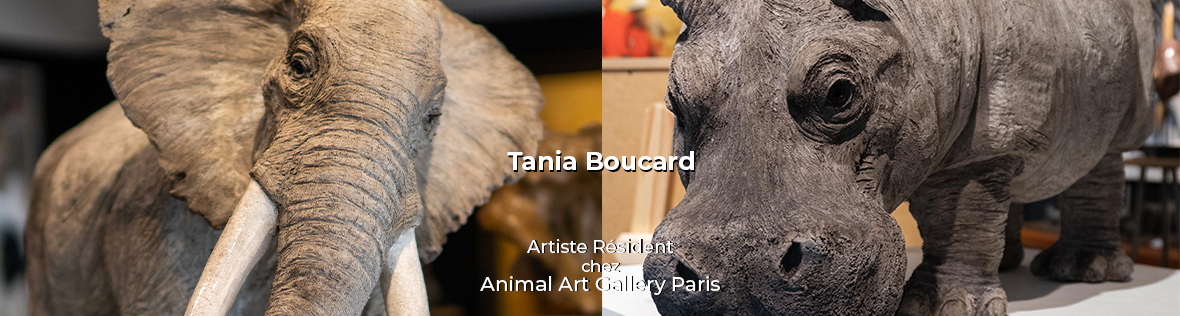
“Grenouille verte” est une œuvre créée par l’artiste Tania Boucard. Cette dernière a utilisé le raku afin de donner vie à cette grenouille de 16,5 x 25 x 26 cm.
Ce raku représente donc une grenouille verte. Sa tête est tournée vers le ciel et sa bouche ouverte laisse penser qu’elle coasse. L'œuvre est très réaliste et Tania Boucard réussit une fois encore à nous transporter dans son univers. Aucun détail n’est laissé au hasard : la couleur, la texture rappelant la peau de l’amphibien ou encore la justesse d’exécution du corps, faisant écho à son travail poussé d’étude de l’anatomie de son modèle.
Le raku est une technique d’émaillage complexe nécessitant plusieurs cuissons. La première cuisson est à 980°, ensuite il y a l’émaillage et une seconde cuisson qui est plus rapide à 980 ° également. De plus,à la fin de la seconde cuisson la sculpture est alors plongée dans de la sciure de bois. Cette dernière donne lieu à une fumée noire qui va permettre la craquelure de de l’émail et ainsi de donner les différentes aspérités de l'œuvre et le relief. Boucard Tania est une artiste maîtrisant parfaitement cette technique ce qui permet ce résultat impressionnant concernant les animaux qu’elle représente.
“Grenouille verte” is a work created by artist Tania Boucard. She used the raku to give life to this 16.5 x 25 x 26 cm frog. So this raku represents a green frog. Her head is facing the sky and her open mouth suggests she’s croaking. The work is very realistic and Tania Boucard manages once again to transport us into her world. No detail is left to chance: the colour, the texture reminiscent of the skin of the amphibian or the accuracy of the execution of the body, echoing his extensive work of studying the anatomy of his model.
Raku is a complex enamelling technique that requires several firings. The first cooking is at 980°, then there is the enamel and a second cooking which is faster at 980° also. In addition, at the end of the second firing, the sculpture is then immersed in sawdust. The latter gives rise to a black smoke that will allow the enamel to crack and thus give the different roughness of the work and the relief. Boucard Tania is an artist with a perfect mastery of this technique which allows this impressive result regarding the animals she represents.
SCARFACE ET L'UN DE SES...
“Scarface et l'un de ses mousquetaires” (lions) est une œuvre de l’artiste Julie Salmon, réalisée avec des encres sur du papier marouflé (3 couches) mesurant 56 x 41 cm. Cette pièce unique présente un lion célèbre du Kenya (Masai Mara) en mouvement qui semble se diriger droit devant lui. L’artiste dessine ce dernier par de fines lignes, puis teint certaines zones en gris avec une fine couche d’encre diluée. L’encre permet de réaliser différentes nuances et intensités donnant ainsi du relief à l’animal. Les tons de la composition sont neutres et apportent un aspect réaliste au dessin. En effet, ceux-ci rendent compte des couleurs naturellement présentes dans les milieux naturels où vit cette espèce.
Le regard est un élément important dans l'œuvre, car il permet un dialogue entre l'animal et le spectateur puisque ce dernier perçoit les émotions retranscrites. Cela insuffle de la vitalité au tableau. Il s’agit d’ailleurs du seul élément en couleur dans la composition. Le lion semble vouloir montrer son caractère à travers son regard. .C’est un travail minutieux et élégant. Julie Salmon représente les animaux qu’elle observe de près dans son œuvre de manière unique.
“Scarface et l'un des mousquetaires” (lions) is a work by artist Julie Salmon, made with inks on 56 x 41 cm (3-ply) brown paper. This unique piece features a moving lion that seems to be heading straight ahead. The artist draws the latter by fine lines, then dyes certain areas in grey with a thin layer of diluted ink. The ink allows to realize different shades and intensities giving relief to the animal. The tones of the composition are neutral and bring a realistic look to the drawing. Indeed, these reflect the colors naturally present in the natural environments where this species lives.
The gaze is an important element in the work, because it allows a dialogue between the animal and the spectator since the latter perceives the transcribed emotions. It brings vitality to the picture. It is the only color element in the composition. The lion seems to want to show his character through his look. It is a meticulous and elegant work. Julie Salmon represents the animals she closely observes in her work in a unique way.